
Children, Tourette Syndrome & Motor Tics: How Chiropractic Care May Help Support Healthy Nervous System Function
If your child has been diagnosed with Tourette syndrome of struggles with motor-tics, which are repetitive eye blinking, shoulder shrugging, facial grimacing, throat clearing, or vocal sounds -then you know how challenging these involuntary movements can be.
If you've been told that medication is the primary treatment option, or that your child will need to "learn to live with it" or that they'll hopefully "grow out of it," there is a natural, drug-free approach that addresses the neurological component of tics.
At Great Life Chiropractic in Deerfield Beach, many parents often look for natural ways to support their children's movement patterns, sensory input, and nervous system. Dr. Jacqueline Tsiapalis is certified in pediatric chiropractic through the ICPA, and we've helped families throughout south Florida, and originally in Vaughan, Canada whose children experienced remarkable reductions in tic frequency and intensity through neurologically-focused chiropractic care. The research supporting this approach is compelling, and we're keen to share what science reveals about the connection between the spine, nervous system, and motor tic disorders.
Understanding Tourette Syndrome and Motor Tics
What Are Motor Tics?
Motor tics are sudden, repetitive, involuntary movements or sounds that children struggle to control. They are classified into several categories:
Simple Motor Tics
- repetitive eye blinking or eye rolling
- facial grimacing or twitching
- shoulder shrugging
- head jerking or nodding
- nose twitching
Simple Vocal Tics
- throat clearing
- sniffing or snorting
- grunting sounds
- coughing
Complex Motor Tics
- combinations of movements involving multiple muscle groups
- touching or smelling objects repeatedly
- jumping, twisting, or bending
- gestures that may seem purposeful but are involuntary
Complex Vocal Tics
- repeating words or phrases
- echolalia (repeating what others say)
- coprolalia (involuntary use of inappropriate words-occurs in only about 10% of cases)
Types of Tic Disorders
Transient Tic Disorder: Tics lasting less than one year, often appearing during childhood and resolving on their own.
Chronic Motor or Vocal Tic Disorder: Either motor or vocal tics (but not both) persisting for more than one year.
Tourette Syndrome: Both motor and vocal tics present for more than one year, typically beginning between ages 3-9.
Common Triggers That Worsen Tics
Parents consistently report that their child's tics intensify with:
- stress, anxiety, or excitement
- fatigue or lack of sleep
- illness or inflammation
- being around others with tics
- transitions or changes in routine
- screen time or overstimulation
Conversely, tics often diminish when children are:
- focused on an engaging activity
- calm and relaxed
- well-rested
- in a predictable, low-stress environment
The Neurological Connection: Why Tics Happen
While genetics play a role in Tourette syndrome susceptibility (approximately 15% of cases have no genetic link), having the gene doesn't guarantee the condition will develop. This points to other critical factors, particularly nervous system function.
The Basal Ganglia and Motor Control
Research demonstrates that tic disorders involve dysfunction in specific brain regions, particularly the basal ganglia, deep brain structures responsible for:
- motor planning and execution
- impulse control and inhibition
- habit formation
- coordinated movement patterns
- filtered unwanted movements
When the basal ganglia don't function optimally, the brain loses its ability to properly inhibit unwanted motor signals, resulting in the involuntary movements and sounds characteristic of tic disorders.
The Spine-Brain Connection
Here's where chiropractic care becomes relevant - the spine is the protective highway for the entire nervous system. Every signal between the brain and body travels through the spinal cord, and interference at any point along this pathway can disrupt normal nervous system function.
Subluxations (spinal misalignments) create mechanical stress and neurological interference that can affect:
- proprioceptive input (the brain's awareness of body position and movement)
- autonomic nervous system regulation
- motor control centers in the brain
- overall nervous system communication
The upper cervical spine is particularly critical because it houses the brainstem, the command center connecting the brain to the rest of the nervous system and directly influencing basal ganglia function
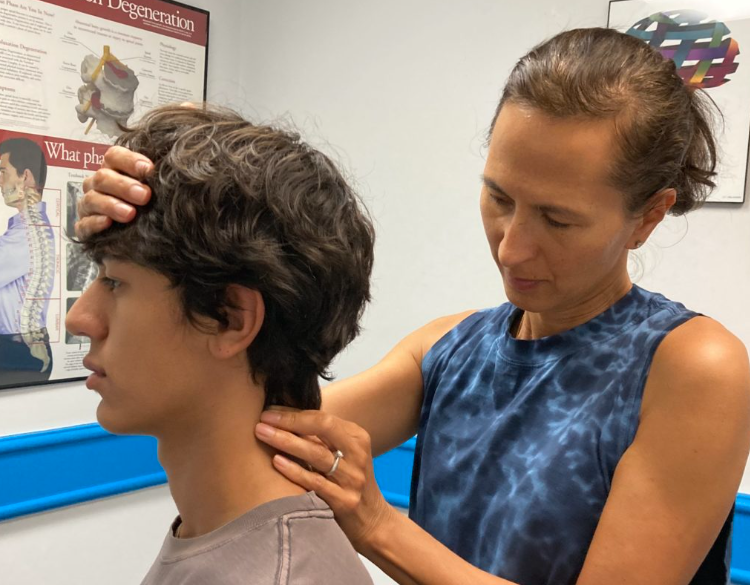
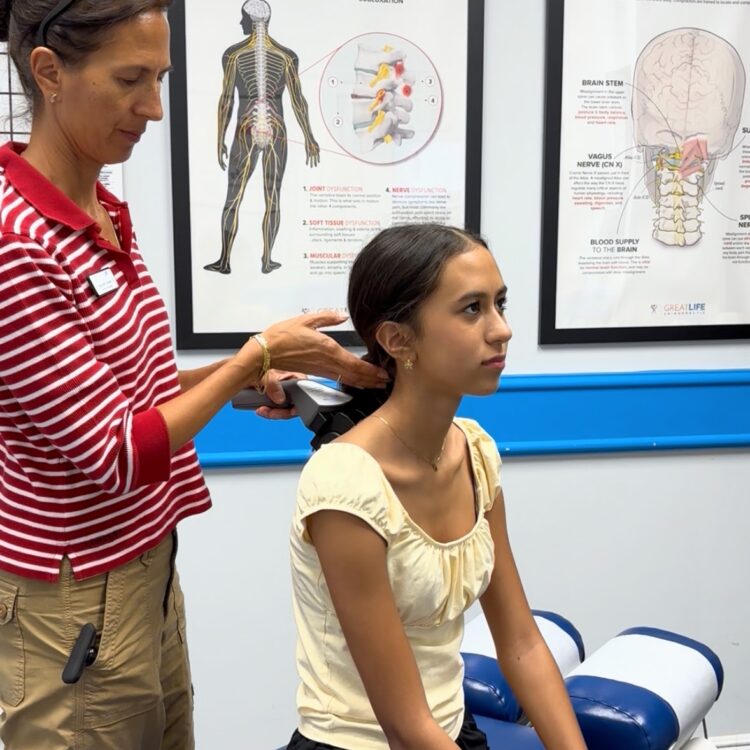
Pediatric chiropractic care at Great Life Chiropractic focuses on identifying stress or neurological interference especially in the upper cervical spine.
What Research Shows: Chiropractic Care for Tic Disorders
Multiple published case studies demonstrate the effectiveness of neurologically-focused chiropractic care for children with motor tics and Tourette syndrome.
Case Study #1: 10-Year-Old Boy with Tourette Syndrome, OCD and Nocturnal Enuresis
Published in the Journal of Pediatric, Maternal & Family Health Chiropractic, 2026, this case involved a 10-year-old experiencing motor and vocal tics with Tourette syndrome.
His symptoms included:
- Anxiety
- Behavioral rigidity
- Sensory sensitivities
- Nocturnal enuresis
- Separation anxiety
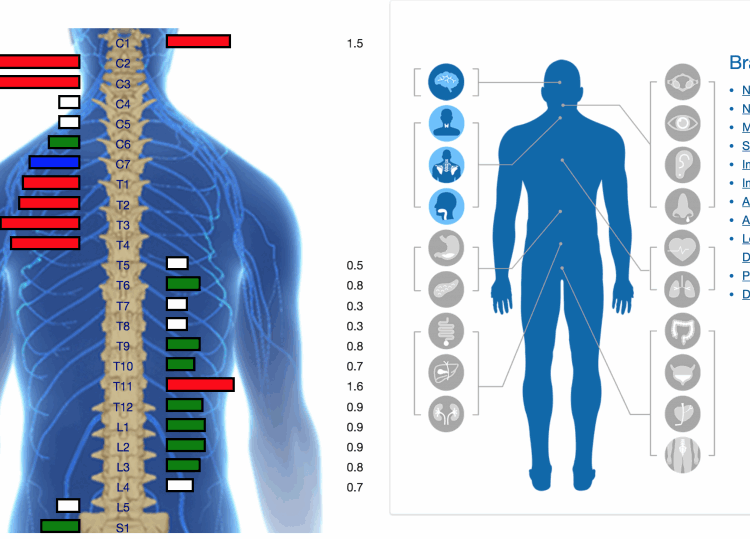
Chiropractic findings: Initial examination revealed increased autonomic nervous system stress through thermographic patterns (INSiGHT scan), surface electromyography (sEMG), and heart rate variability (HRV), accompanied by structural and functional deficits.
Treatment approach: The child received specific chiropractic adjustments targeting vertebral subluxations.
Results: After a series of corrective chiropractic adjustments, there was structural and functional improvement including measurable reductions in tic frequency and severity, decreased anxiety and behavioral rigidity, along with improved bladder control.
This case demonstrates the potential benefits of chiropractic care in addressing neurological imbalances and behavioral challenges in pediatric patients with Tourette syndrome and OCD.
Case Study #2: 6-Year-Old Girl with Transient Motor Tic Disorder
Published in the Journal of Pediatric, Maternal & Family Health - Chiropractic, 2009, this case involved a 6-year-old girl experiencing motor tics for six months.
Her symptoms included:
-
Repetitive eye blinking and rolling every 3-5 seconds
-
Bilateral shoulder shrugging
-
Arching back of head and neck with open mouth
-
Medical diagnosis of "transient motor tic disorder"
-
Unremarkable medical testing (including brain MRI)
Chiropractic findings: The examination revealed spinal subluxations at multiple levels - the atlas (C1), C7, T4 vertebrae, and right sacroiliac joint - along with postural distortions including left head tilt, high left shoulder, and pelvic misalignment.
Treatment approach: The child received specific chiropractic adjustments using Gonstead Technique for spinal subluxations and Toggle Recoil for the atlas vertebra.
Results: After just 6 visits over 5 weeks, the child's tic disorder completely resolved. When tics returned 2.5 months later following an ice-skating fall (demonstrating the connection between physical trauma and nervous system function), the same chiropractic approach again resolved the symptoms.
This case demonstrates that addressing spinal subluxations can have profound effects on neurological conditions like motor tics - and that physical trauma can trigger recurrence, emphasizing the importance of maintaining proper spinal alignment.
Case Study #3: 14-Year-Old Boy with Severe Tourette Syndrome
Published in the Journal of Pediatric, Maternal & Family Health - Chiropractic, 2013, this case involved a 14-year-old boy with debilitating Tourette syndrome.
His situation:
-
Experiencing 1,000 tics per day
-
Violent head throwing movements causing fatigue
-
Missing school due to severity of symptoms
-
Taking three different medications with inadequate control
Chiropractic findings: The examination including thermography and radiological examination revealed sites of spinal subluxations.
Treatment approach: The patient received upper cervical specific chiropractic adjustments over 5 months, making 30 visits to address upper cervical, atlas, misalignment.
Results: After 5 months of care, the boy experienced dramatic improvement:
-
Tics reduced from 1,000 per day to just 30-35 per day (97% reduction)
-
Able to discontinue one medication entirely
-
Reduced dosage of the other two medications
-
Returned to school successfully
This case is particularly powerful because it demonstrates that even severe, medication-resistant Tourette syndrome can improve significantly when the upper cervical spine is properly aligned and nervous system interference is removed.
Case Study #4: 9-Year-Old Boy with Multiple Conditions
Published in the Annals of Vertebral Subluxation Research, 2003, this case involved a 9-year-old boy with Tourette syndrome and multiple overlapping conditions we frequently see in our office.
His conditions included:
-
Tourette syndrome with motor and vocal tics
-
ADHD affecting focus and behavior
-
Depression
-
Asthma
Treatment approach: The child received specific chiropractic adjustments targeting spinal subluxations throughout the entire spine, with particular attention to the upper cervical region.
Results: The improvements were remarkable and rapid:
-
2 days after first adjustment: 50% reduction in tics
-
2.5 weeks of care: 80% of tics resolved
-
3 weeks of care: Only occasional verbal tic while eating remained
-
6 weeks of care: Complete resolution of Tourette syndrome AND all other conditions (ADHD, headaches, depression, insomnia, asthma)
This case powerfully demonstrates that when multiple neurological and behavioral conditions exist together, they often share a common root cause in nervous system dysfunction - and addressing that root cause can produce improvements across all symptoms simultaneously.
Case Study #5: 15-Year-Old with Migraines, ADHD, OCD, and Tourette Syndrome
Published in the Journal of Chiropractic Medicine, 2013, this case involved a 15-year-old adolescent boy with chronic migraines and more than 10 years of learning and behavioral difficulties, including attention-deficit/hyperactivity disorder, obsessive compulsive disorder, and Tourette syndrome.
Treatment approach: The patient received spinal manipulation and was given home physical coordination activities that were contralateral to the side of the involved basal ganglia and ipsilateral to the involved cerebellum, along with interactive metronome training.
Results: Quantitative changes were noted in neurological soft signs, tests of variables of attention Conners' Parent Rating Scale, the California Achievement Test, grade point, and reduction of medications.
This research validates the brain-based approach - addressing not just the spine but the entire nervous system's ability to function optimally through targeted adjustments and neurological rehabilitation.
Why Upper Cervical Care is Particularly Effective for Tic Disorders
While we assess and adjust the entire spine at Great Life Chiropractic, the upper cervical spine (atlas and axis vertebrae) deserve special attention for neurological conditions.
The Atlas-Brainstem Connection
The atlas (C1 vertebra) creates a protective ring around the brainstem which is the critical junction between the brain and spinal cord. When the atlas is misaligned it creates:
- direct mechanical pressure on the brainstem
- altered proprioceptive input to the brain
- disrupted communication between the cerebellum and basal ganglia
- autonomic nervous system dysregulation
- interference with motor control centers
Birth Trauma and Upper Cervical Misalignment
Many children with tic disorders have a history of:
- difficult or prolonged labor
- vacuum or forceps-assisted delivery
- c-section (especially emergency c-sections)
- shoulder dystocia or getting stuck during delivery
- cord around the neck
- prematurity or NICU stay
These birth traumas create stress and potential misalignment in the upper cervical spine that can persist for years, creating neurological dysfunction that eventually manifests as tics, ADHD, OCD, or other conditions.
Accumulated Childhood Trauma
Even children with smooth births experience hundreds of falls and bumps learning to walk, play sports, and navigate childhood. Each impact, especially to the head and neck, can create or worsen upper cervical misalignment, gradually building the neurological dysfunction that triggers tic disorders.
Our Neurologically-Focused Approach at Great Life Chiropractic
Great Life Chiropractic serves infants, children, athletes, pregnant mothers, and families throughout Deerfield Beach, Boca Raton, Parkland, Coral Springs, Pompano, and nearby South Florida communities.
Our approach mirrors the methods used in these successful published case studies. Dr. Jacqueline Tsiapalis has specialty certification in pediatric chiropractic with the ICPA, helping support healthy nervous system function and physical development throughout childhood, adapted to each child's unique presentation.
Families searching for a pediatric chiropractor in Deerfield Beach often choose Great Life Chiropractic for its gentle approach, advanced pediatric training, and dedication to family's optimal wellness.
Visit Great Life Chiropractic in Deerfield Beach
If your child is experiencing motor tics, and/or vocal tics, or has been diagnosed with Tourette syndrome, pediatric chiropractic care may help support a healthier functioning nervous system naturally.
Our thorough assessment at Great Life Chiropractic includes a complete health history, INSiGHT scan and detailed spinal examination, followed by an individualized care plan designed specifically for your child's specific needs.
Schedule your new patient assessment, an in office complimentary consultation with one of our doctors, or a discovery call to learn more. We look forward to meeting you and your child, to see how we can help!
Make Appointment
Make Appointment
Make Appointment
Book Your Free Discovery Call Now
This complimentary phone consultation is for parents who want to learn more about how pediatric chiropractic care might help their child. You'll speak directly with one of our chiropractors, who are specially trained and certified in pediatric care.
Patient Stories - Hear what our patients have to say
EXCELLENT Based on 96 reviews
 Posted on Google
 Ben BridgesTrue professionalism. You will come out feeling better not only correction but also prevention to help you live a better life. Me as a youth basketball coach who’s continuing to be active in the community working with kids it’s so important that I have a strong Temple and Dr. G helps with that without him there’s no way I could be who I am to these kids and I’m truly thankful for him and his practice. It’s truly a family environment.Posted on Google
 Les GersonGreat care and expert chiropractic services. Dr. Gus and Dr. Jackie are the best.Posted on Google
 Giselle FilippiniI’ve been seeing Dr. Jackie and Dr. Gus for over nine months, and I truly can’t say enough wonderful things about them. They are not only incredible chiropractors but also genuinely amazing people. As a family-owned practice, they make you feel welcomed and cared for from the moment you walk through the door. What I appreciate most is that they take the time to truly understand your body and what it needs. They don’t just focus on relieving pain—they care about your overall health and well-being. They listen, educate you, and make sure you understand what’s happening with your body every step of the way. Dr. Jackie and Dr. Gus are so passionate about what they do, and it shows in every interaction. They are humble, compassionate, and genuinely invested in their patients. They take the time to get to know you as a person, and you can tell they truly want the best for everyone who walks through their doors. After more than nine months of care, I can confidently say I trust them completely. Even my husband started going! If you’re looking for chiropractors who are knowledgeable, caring, and truly dedicated to helping you feel your best, I highly recommend Dr. Jackie and Dr. Gus. They have made such a positive impact on my health, and I’m incredibly grateful for the care they provide. ❤️Posted on Google
 Constantinos MitchellDr. Gus and Dr. Jacqui have been amazing. Super informative and helpful through this process. My spine is feeling better day by day. Great people.Posted on Google
 Matt MacGregorDr Gus and staff are amazing. Very professional and thorough. Definitely recommend.Posted on Google
 Girard MitchellI have had such a positive experience with Great Life Chiropractic. I was having very painful sciatica issues in Dec 2025. Through their work, I was able to snow ski pain free four months later in March. I am on a maintenance program with them to keep my body aligned and healthy.Posted on Google
 Tatiana BessonGreat atmosphere, very friendly staff, and very professional doctors Gus and Jackie. They made a difference in my life for sure!Posted on Google
 Daphney LundiGreat Life Chiropractic is best experience with chiropractic care I ever had. I highly recommend.Posted on Google
 Angelica AddeoI came to Dr Jackie for help during my pregnancy in the second trimester with extreme hip and lower back pain. Moving and handling my toddler were extremely uncomfortable and nothing was helping. I came in with a budget and very concerned I wouldn’t be able to get the help I needed but they helped make it possible for me and also I’ve been consistently coming here week after week into my third trimester (currently at week 34) and feeling much much much more at ease than I was in the second. I am beyond grateful for the care and attention they provide and would HIGHLY recommend them for any pregnant moms out there looking for help with pains. I’ll most definitely be continuing chiropractic care here into postpartum and beyond. Thank you Dr Jackie and team for your help!!!Posted on Google
 Chris ClaytonThis was my first time going to a chiropractor and am very grateful that I found Great Life Chiropractic. Dr Gus and Jackie and their team have been such a pleasure to see every week. I found their practice to be very educational and accommodating. They moved cautiously with me because of my reservations and put together a plan to help my recovery. I was going twice a week and after three months there was noticeable improvements with my lower back and neck. They were honest and transparent with me (using X-rays and other testing measures) and have since taken me down to 1x every two weeks. I am tracking well with my exercises, stretches, and movements and look forward to my visits to keep me in-line and aligned. No more shooting pains when I sneeze and lack of mobility in neck. Would highly recommend this family chiropractor office.
Book Online Now
Ready to book your child's exam? New patient appointments for initial visits can be made here. Please choose the preferred day and time for your appointment.