
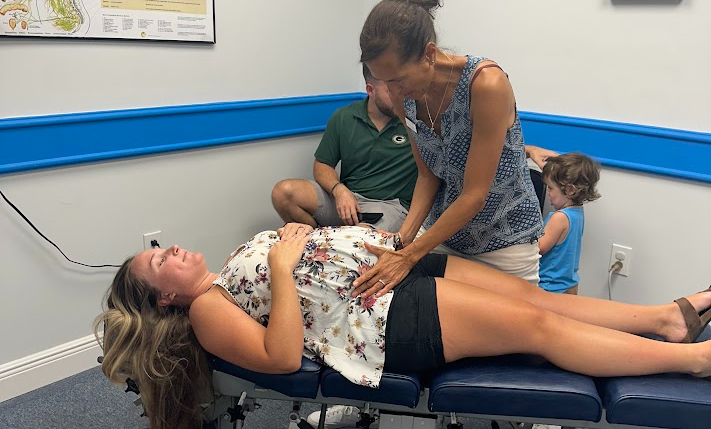
The Webster Technique
The Webster Technique has become a cornerstone of chiropractic care during pregnancy, known for its role in optimizing the physiological function of both mother and baby for birth. Developed by Dr. Larry Webster, this technique has grown into an essential tool for chiropractors and families to enhance neuro-biomechanical function in the sacral and pelvic regions. By addressing sacral subluxation and sacroiliac (SI) joint dysfunction through specific adjustments, the Webster Technique helps create a more balanced and functional pelvic environment. In doing so, it can alleviate factors contributing to dystocia—difficult or abnormal labor—ultimately supporting safer, smoother births. Its widespread use has led to remarkable results for mothers worldwide.
The origins of the Webster Technique are rooted in a deeply personal experience for Dr. Webster who observed the after effects of a traumatic birth. After caring for an infant who presented with two broken clavicles following a complicated and invasive pregnancy and birth, including breech presentation, External Cephalic Version (ECV) and traumatic birth, Dr. Webster knew there had to be a less invasive way to support the birthing process. As he reflected on this, he envisioned what would eventually become the Webster Technique—a gentle, non-invasive chiropractic approach that focuses on aligning the sacrum and releasing tension in the pelvic ligaments during pregnancy. This method promotes natural biomechanics and supports optimal neurological function, allowing the birth process to unfold without unnecessary interference.
By helping prepare the mother’s body for an optimal pregnancy and birth, chiropractors using the Webster Technique play a vital role in promoting a healthier, more natural childbirth process.
A Pathway to Safer Births
Dr. Webster first focused this technique on pregnant women with breech babies, and the results were transformative—a majority of babies naturally turned to the optimal head-down position after mom received the adjustment. Initially called the “Webster Breech Turning Technique,” it quickly gained traction as other chiropractors replicated his success. As the technique evolved, it quickly outgrew the nomenclature of a “breech turning technique,” expanding into a holistic approach that supports overall neuro-biomechanical function of pregnant women.
Dr. Webster’s legacy continues through the efforts of the International Chiropractic Pediatric Association (ICPA), which formalized the Webster Technique Certification Program in 2001. Led by Dr. Webster’s wife, Connie Webster, and Dr. Jeanne Ohm, the program emphasized the proactive use of the technique throughout pregnancy to reduce the causes of dystocia and facilitate easier births. Dr. Ohm, in particular, featured the idea that consistent application of the Webster Technique throughout pregnancy could lead to safer, less stressful birth experiences.
By helping prepare the mother’s body for an optimal pregnancy and birth, chiropractors using the Webster Technique play a vital role in promoting a healthier, more natural childbirth process. A safer and less traumatic birth process not only enhances positive birth experiences but also fosters stronger family connections and resilience during the early stages of life. Dr. Webster’s vision continues to inspire families around the world, transforming the way we approach and support childbirth.
Practical Understanding of the Webster Technique: A Two-Tiered Approach to Improving Birth
The Webster Technique has evolved from a focus on breech presentations to a comprehensive method for enhancing neuro-biomechanical function throughout pregnancy. In simple terms, it helps both mother and baby engage in the “dance of birth” with greater ease, awareness, and physiological harmony.
Physically, the Webster Technique supports the neuro-biomechanics of the body by optimizing nervous system function and balancing the pelvic bones, muscles, and uterine ligaments. This approach respects the body’s inborn intelligence, allowing birth to unfold more smoothly and naturally.
On the emotional side, the Webster Technique fosters trust, ease, and self-confidence. Families are empowered to actively participate in the birth process, learning to approach it with adaptability and a greater sense of coherence.
Step One: Enhancing Neuro-Biomechanics
A key reason the Webster Technique has gained widespread popularity is its holistic approach to addressing dystocia—difficult or abnormal labor. As described in Williams Obstetrics, dystocia can stem from three main factors related to the mother’s body:
1. Power
This refers to the strength and effectiveness of uterine contractions. Pelvic misalignments, particularly in the sacrum, can interfere with the nervous system’s ability to coordinate strong, consistent contractions. The Webster Technique corrects sacral subluxations, which improves nerve function and enhances the mother’s ability to coordinate efficient contractions, supporting the natural progression of labor.
2. Passage
The structure of the pelvis must allow enough space for the baby to move through during birth. Sacral misalignments can reduce the size of the pelvic outlet, creating physical barriers for the baby’s descent. By restoring proper pelvic alignment and mobility, the Webster Technique helps increase space in the birth canal, facilitating an easier passage for the baby.
3. Passenger
The baby’s position in the womb is influenced by the mother’s pelvic alignment. Misalignments can create tension in the uterine ligaments, restricting the baby’s movement and leading to unfavorable positions, such as breech. The Webster Technique releases this tension, giving the baby more freedom to move and often encouraging a head-down position for birth.
The technique acts as a stepping stone for families to consciously engage with the active process of giving birth, allowing them to “do the activity” of birth rather than just passively experience it.
By addressing the neuro-biomechanical factors that influence labor, the Webster Technique creates the physical conditions necessary for a more natural and efficient birth.
Step Two: Building Confidence and Adaptability
The Webster Technique also nurtures emotional ease, trust, and confidence as families prepare for birth. This approach equips parents with practical tools to align with the birth process through an embodied awareness of the three key elements—Power, Passage, and Passenger. Regular adjustments and a focus on the natural biomechanics help enable a more skillful, active participation in birth.
While the physical benefits of the Webster Technique help facilitate a smoother, more natural birth, its emotional and mental impacts are equally important. The technique acts as a stepping stone for families to consciously engage with the active process of giving birth, allowing them to “do the activity” of birth rather than just passively experience it. By developing a deeper connection with the body, families can approach each contraction with greater awareness, using techniques such as focused breathing, relaxation, and body-centered movement to support the birth process.
Although birth is a natural process that requires us to “let go” and allow nature to take its course, it’s also important to recognize that we are consciously involved in it. There are many things we may actively do during labor. Even “letting go” can be considered a deliberate, conscious act.
This balance between the body’s natural instincts and our conscious participation is at the heart of the “dance” of birth, and the Webster Technique helps nurture both. It supports the body’s innate function while empowering families to engage mindfully with the birth process, creating a harmonious partnership between the two.
It’s crucial to recognize that there are actions the mother or support team can take that either hinder or enhance the mother and baby’s unique, physiological process. The Webster Technique empowers families to know which actions are in line with their body’s innate wisdom, allowing for a more active, informed, and cooperative approach to labor.
Through this practical understanding, families prepare both physically and emotionally for birth. This preparation leads to several key benefits:
More Positive Birth Experiences
Families feel empowered and less overwhelmed, even when faced with unexpected challenges, reducing the likelihood of birth trauma.
Calm and Confident Providers
Birth professionals are more relaxed when they see parents actively engaged and prepared, making unnecessary interventions appear all the more unnecessary.
Greater Emotional Integration
Mothers, babies, and fathers (or partners) are less likely to experience feelings of helplessness or loss of control, staying connected rather than disconnected from the process.
Stronger Parenting
This sense of empowerment carries into the postpartum period, with families reflecting on the birth experience with confidence and coherence rather than confusion or regret, allowing for a greater start to family wellbeing.
What Moms Are Saying About the Webster Technique
The journey of pregnancy is often a mix of excitement and challenge. For many mothers, the Webster Technique has provided not just physical relief but also emotional reassurance during this transformative time. As a natural and non-invasive method, the Webster Technique empowers women by helping them achieve a more balanced and comfortable pregnancy, ultimately leading to safer and more positive birth experiences.
One mother, reflecting on her high-risk pregnancy, shared her sense of relief after discovering the Webster Technique: “As a mom navigating her way through a high-risk pregnancy, news of one more complication just leaves you with more questions and concerns… But the Webster Technique gave me a way to support my baby’s optimal positioning, and I felt a sense of control and peace that I hadn’t before.” For mothers facing the possibility of interventions like a cesarean section due to malpresentation, the Webster Technique has offered a proactive approach to facilitating better outcomes.
Another mother echoed these sentiments, highlighting the physical benefits she experienced: “Before I started seeing my chiropractor, I could barely walk and was in so much pain. By the end of my pregnancy, not only could I walk pain-free, but I felt amazing! In addition, I know that routine chiropractic care contributed to my fast, complication- free labor. I can’t imagine going through pregnancy and birth without chiropractic care.” Her testimony underscores how the Webster Technique not only alleviates discomfort but also supports the natural progression of labor, leading to smoother and less stressful births.
The Webster Technique gave me a way to support my baby’s optimal positioning, and I felt a sense of control and peace that I hadn’t before.
For many women, the decision to seek chiropractic care isn’t just about addressing issues that arise late in pregnancy; it’s about laying the groundwork for a healthy, balanced pregnancy from the start. One mother shared, “The Webster Technique should be the logical first choice for mothers and birth practitioners to facilitate normal function throughout pregnancy.” By starting care early, these mothers ensure that their bodies are better prepared for the demands of pregnancy and birth, reducing the likelihood of complications and the need for medical interventions.
The benefits of the Webster Technique extend beyond the physical. One mother poignantly noted how the technique provided emotional and mental comfort during a time of uncertainty:
“When I learned that my baby was breech, I was scared and overwhelmed. But after receiving the Webster Technique, I felt a huge sense of relief—not just physically, but emotionally. It was as if my body and my baby were finally on the same page, working together for a safe and natural birth.”
For mothers who have utilized the Webster Technique, the experience is often transformative for their births. It empowers them to take control of their pregnancy journey, aligning their bodies with the natural processes of birth and fostering a deeper connection with their baby. Through the gentle and precise adjustments of the Webster Technique, these mothers find not only relief from discomfort but also the confidence and peace of mind that comes from knowing they are doing everything possible to ensure a safe, healthy birth for their baby.
Before the age of modern medical interventions, women instinctively trusted their bodies, allowing the natural process of birth to unfold without fear or interference.
Your Inner Wisdom
A unique value of the Webster Technique—and of birth itself—is learning to trust your inner wisdom. This inner knowing, often referred to as a “gut feeling” or “intuition” is something all of us possess. It whispers to us in moments of uncertainty, guiding us when we take the time to listen. How deeply we connect with this wisdom often depends on the life experiences that have shaped us, either opening or closing us to its voice.
For centuries, women have relied on this intuitive wisdom, particularly during pregnancy and birth, to make decisions that support their health and well-being. Before the age of modern medical interventions, women instinctively trusted their bodies, allowing the natural process of birth to unfold without fear or interference. They chose birthing positions that felt right, moved freely during labor, and were supported by those present. Birth was seen as a process that occurred on its own schedule, and after delivery, mother and baby were immediately bonded, promoting a swift recovery and strong, nurturing connections.
In today’s technologically advanced society, however, this approach has been replaced by a more clinical and controlled birthing experience. Medical interventions, while sometimes necessary, often restrict the natural processes, creating fear and disconnection. Women are placed in positions that work against their unique physiology and biomechanics, and are given medications that disrupt the body’s natural rhythms, and experience interventions that slow labor’s momentum. This deviation from nature can make women feel powerless and disconnected from their bodies, increasing both physical and emotional stress.
Trusting in your body’s ability to birth is essential to restoring this balance. Chiropractors who utilize the Webster Technique understand the importance of this trust. By supporting the nervous system and aligning the body, they help women reconnect with their innate physiological intelligence, promoting a birth process that honors both the mother’s and baby’s innate wisdom and their inherent ability to actively move through this life-transforming event.
Dr. Jeanne Ohm, a leading advocate of chiropractic care during pregnancy, spoke about this deep, intuitive guidance that mothers feel during birth. She noted, “We all hear it. It whispers to us during a time of need, or fear, or even peace. But it speaks.” This inner voice—the one that guides women through the transformative experience of birth—becomes stronger when women learn how to trust and work with their bodies. Chiropractic care, by optimizing the alignment of the pelvis and the function of the nervous system, helps clear the way for this inner wisdom to emerge. It deepens a mother’s connection to her body and her baby. As she tunes into this inner wisdom and learns to actively participate in her birth experience— whether through breath work, movement, or conscious relaxation—she discovers a greater sense of confidence and empowerment.
Reclaiming trust in the birth process is about reestablishing a connection with the body’s inherent ability to birth. This powerful trust allows birth to unfold as it is meant to—naturally, powerfully, and in alignment with the mother’s intuition.
Trusting Innate and the Dance of Birth
Trust is often effortless when everything goes according to plan. However, when reality diverges from our expectations, it is here where our true strength and skills are tested. A central tenet of chiropractic care is trusting the body’s Innate Intelligence—the body’s inherent wisdom. This model teaches that success is not solely measured by whether an outcome aligns with our plans but by how we navigate and integrate the entire experience, especially when faced with the unexpected.
One mother, who had been under chiropractic care throughout her pregnancy, planned to give birth to her first child at a birth center. As her pregnancy extended beyond 41 weeks and her blood pressure began to rise, she and her birth team decided that a hospital induction was the safest course of action. Initially, she hesitated to reach out to her chiropractor, fearing judgment for not adhering to “the most natural” option. However, when she finally made the call, she was met with warmth and support for following her inner voice and what was right for her.
Her chiropractor reminded her of the birth skills they had discussed—breathing techniques, hands-on support from her partner, and, most importantly, trusting the dance of birth and honoring each unique step in the process. Encouraged, the mother chose to labor without pain medication and successfully delivered a healthy baby girl. Afterward, she called her chiropractor and said, “Your voice was in my mind the whole time, and I knew I could do it.” Her story is a testament to the power of preparing not just the body but also the mind, equipping oneself with the skills to navigate and integrate whatever birth may bring—even if it includes an unexpected hospital induction.
Another mother, facing a different challenge, had planned for a natural birth. However, her baby remained in a breech position throughout most of her pregnancy. Trusting her intuition and the wisdom of her body, she decided against attempting an external cephalic version (ECV) and opted for an elective cesarean. After the birth, it was discovered that the baby had a short umbilical cord wrapped tightly around the neck three times—confirming perhaps that the breech position was indeed the safest for her baby.
This mother expressed immense gratitude for having trusted her instincts and for her chiropractor who affirmed her belief in “not forcing an outcome,” knowing that her decision not to perform an ECV may have prevented potentially devastating complications for the baby. She and her baby received chiropractic adjustments soon after the birth and felt this contributed to her swift recovery and early parenting success. While her experience was far from what she had originally planned, it was a successful outcome because she felt in control and empowered, honoring the intelligence of her baby’s breech position, and trusting in her own intuition.
In yet another story, a mother had planned a hospital birth, but her baby persisted in a breech position due to excessive scar tissue from a pelvic surgery prior to pregnancy preventing her baby’s normal motion. After two weeks of receiving the Webster Technique every other day, the baby still had not shifted indicating that the breech presentation was ideal for her. Spontaneously, she went into labor and arrived at the hospital deep into her birth journey. The on-call doctor assessed her and seeing her progress and confidence said, “I can tell your body can do this; let’s deliver this baby vaginally.” The mother reported that her baby was delivered breech with more ease than her two previous head-down births. This remarkable experience not only brought her a sense of accomplishment but also amazed the hospital staff, many of whom witnessed their first natural breech delivery.
These stories illustrate a fundamental truth: While we cannot plan every detail of our birth, we can certainly prepare ourselves to be more adaptable to whatever comes. With the support of chiropractic care, the Webster Technique, and skillful awareness of the activity of birth, parents can trust in themselves to navigate the unexpected with confidence, and celebrate their unique dance of birth. This approach allows families to integrate their experiences with trust, connection, and support, maintaining a bond with the Innate Intelligence of life, regardless of how the journey unfolds.
A New Model of Family Wellbeing
The Webster Technique and the highly trained doctors of chiropractic who focus on family care represent more than just an approach for easing pregnancy and birth—it introduces a new model of family wellbeing, built on the recognition that children’s health begins in pregnancy. The principles that guide care during pregnancy—honoring the body’s inborn wisdom and aligning with ideal physiological function—remain the same principles of care for the newborn period.
In this model, an infant’s wellbeing is rooted in our respect and support of their normal physiology. Chiropractors understand that the birth process can place profound strain on a newborn’s spine and nervous system. Even in natural birthing scenarios where less strain is exerted externally, the process can still cause misalignments that may interfere with vital functions and development. Early nervous system trauma may then unfold into common issues such as colic, difficulty nursing, sleep disturbances, or chronic illness.
In the early days and weeks after birth, and really for the rest of life, nervous system health allows a newborn to adapt to their new environment. Gentle, safe, and effective chiropractic care provided by trained chiropractors, offer the newborn baby optimized adaptive intelligence by improving the communication pathways between the brain and body. Gentle chiropractic adjustments directly support the infant’s vital functions such as digestion, breathing, and elimination, while promoting the infant’s emotional regulation and his or her overall ability to integrate and adapt to life’s stresses.
Chiropractic care fosters not only early physical health but also emotional bonding, creating an environment of wellbeing that extends far beyond the early days of life. As babies grow and learn to hold up their head, sit, crawl, and walk, regular chiropractic checkups ensure that their spinal alignment remains in balance, ensuring healthy nervous system expression. By nurturing this early phase of life, chiropractic care sets a foundation for a lifetime of healthy development.
Families who choose this path often express benefits regarding their child’s growth and development. They often credit a “chiropractic family wellness lifestyle” for renewing their confidence and trust in their child’s wellbeing. In many ways, this reflects the highest purpose of chiropractic care for infants: stronger family bonds inspired by trust in the Innate Intelligence of life.
A Brighter Future
The Webster Model of Birth encourages us to view birth not just as a physiological event, but as a transformative experience that can be navigated with grace, coherence, and confidence. The legacy of Dr. Larry Webster and Dr. Jeanne Ohm is rooted in their visionary approach to family wellbeing, starting with pregnancy and birth. Their work has shown that by aligning with the body’s normal physiology and supporting the nervous system, we can reduce birth trauma, enhance the health of newborns, and empower families.
This Webster Model of Birth recognizes Innate Intelligence within both mother and child, providing gentle, non-invasive support that allows families to trust in the body’s physiological processes. Webster chiropractors not only support the body but also help families reconnect with their inner wisdom—the guiding voice that fosters trust and confidence throughout the journey of pregnancy, birth, and parenting. By tuning into this inner voice, mothers can embrace life with clarity and purpose, strengthen their family’s bond, and promote resilience for life’s many paths.
As more families embrace the chiropractic family lifestyle, they contribute to a broader vision of wellbeing—one that has the potential to heal not just families, but entire communities. It’s this powerful idea that drives the mission of the ICPA and the Webster Technique: Chiropractic today for a better world tomorrow.
If you are expecting and would like to get checked by the Webster Technique, schedule a checkup below with our Great Life Chiropractic Prenatal Specialist Dr. Jacqueline Tsiapalis in Deerfield Beach, Florida. Let us help you and your family experience the potential of prenatal chiropractic care!