
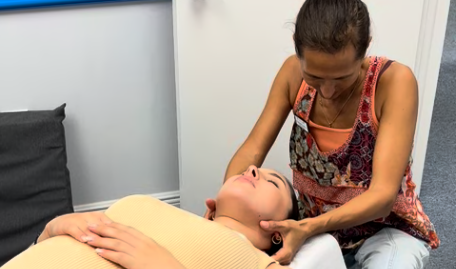
Inside the Chrysalis: Transforming Trauma Through Fluid Adaptability
By Satya Sardonicus, DC, CACCP
In our modern world, nearly half of all children struggle with some form of chronic health challenge. From anxiety and sensory issues to developmental delays and behavioral concerns, these aren’t just statistics—they’re families searching for answers. What if these challenges aren’t signs of something broken, but of intelligent systems asking for a different kind of support?
At age seven, I experienced a severe rear-end collision that would alter the course of my life. While the immediate injuries were clear—three herniated discs in my neck and one in my lower back—something more insidious was set in motion. Growing up, I developed what everyone thought were just personality quirks: intense reactivity to sensory input, quick to anger and frustration, emotions that seemed bigger than situations warranted. By 16, after another minor accident, my system began to unravel completely.
Whether it’s a child unable to regulate their emotions or an adult’s body seemingly betraying them—it can feel like everything is falling apart. But what if this falling apart is actually an invitation to reorganize into something new?
In my early 20s, the symptoms became inhuman. Headaches I rated as “25 on a scale of 1-10.” Constant neck pain, dizziness, and nausea. Electric shocks shooting down my arms and legs. Heart rate irregularities. Breathing difficulties. My nervous system was so dysregulated that primitive reflexes— normally only seen in infants—began reappearing. Every specialist had a different theory: maybe MS, maybe fibromyalgia, maybe chronic fatigue. Today, they might have called it Functional Neurological Disorder (FND) or POTS.
The Wisdom of Crisis
Everyone kept saying it was “all in my head”—until an upright MRI at my chiropractic college revealed the truth: My brain was literally herniated out of the base of my skull. This crisis moment contained a profound lesson that would transform not only my own healing journey but also my understanding of how to help others.
Consider the metamorphosis of a caterpillar. Inside its chrysalis, the caterpillar doesn’t simply grow wings—it actually liquefies completely before reorganizing into its next expression of life. What appears to be complete dissolution is actually the necessary predecessor to transformation. When we’re in crisis—whether it’s a child unable to regulate their emotions or an adult’s body seemingly betraying them—it can feel like everything is falling apart. But what if this falling apart is actually an invitation to reorganize into something new?
Beyond Traditional Approaches
As a second-generation chiropractor raised in a family of holistic health practitioners, I deeply understood the power of nervous system regulation through chiropractic care. Yet my own experience, combined with seeing countless patients who struggled to maintain their adjustments or fully integrate therapeutic changes, revealed something crucial: There was a missing piece in how we approached nervous system healing.
Fascia—the continuous web of connective tissue that wraps every structure in our body—isn’t just packaging; it’s a sophisticated communication network that profoundly influences how our brain processes information. Within this system, I discovered a particularly crucial component: the Dural Fascial Kinetic Chain (DFKC).
The DFKC is a continuous fascial network that profoundly influences brain state and processing. When there’s tension in this system, it’s like having a smoke alarm blaring in your house 24/7.
Even if there’s no actual fire, that constant alarm signal changes everything about how your brain processes reality and how your body responds to care. This understanding doesn’t replace the power of chiropractic adjustments—rather, it helps explain why some adjustments hold better than others and offers additional tools for creating lasting change.
The Key to Lasting Change
This understanding transformed my approach to complex cases. While traditional chiropractic care excellently addresses spinal subluxations, persistent protective fascial patterns, especially in the DFKC, often hold these misalignments in place. Even more importantly, tension in this system keeps the brain stuck in survival mode, making it difficult for any therapeutic intervention to create lasting change.
Think about what happens when you smash your finger in a door. Your instinctive response is to shake your hand or squeeze it. This natural wisdom reveals something profound about how we can influence brain state through specific movement and pressure patterns. Movement signals (proprioception) travel to your brain on faster nerve pathways than alarm signals, effectively counteracting them and helping your system recover.
But when there’s chronic tension in the DFKC, these protective patterns become like a background noise of threat that no amount of positive input can fully overcome. This is why even excellent therapeutic interventions sometimes fall short—not because they’re wrong, but because the brain isn’t in a state to fully receive and integrate change.
Creating Conditions for Transformation
Understanding this led to the development of the NeuroFascial Flow Method (NFFM), which works to create the conditions where healing becomes not just possible, but natural. In research I presented at the International Conference on Movement and Cognition, participants using these practices showed an 80% improvement in quality of life measures, including better sleep, reduced anxiety, and enhanced cognitive function.
Practical Tools for Transformation
One of the powerful tools in NFFM is what I call “squeeze hugs”—a method of applying broad, deep pressure that works with your body’s natural proprioceptive system to signal safety to your brain. While simple, this technique becomes particularly effective when used as part of the comprehensive NFFM approach to shifting brain state through the neurofascial interface. The results can be remarkable. When I taught this technique to an 8-year-old girl, her mother reported a “complete 180” in her daughter’s well-being within weeks.
Sleep improved for the first time in her life. Energy levels stabilized. Most importantly, the harsh self-judgment began to soften, replaced by a growing sense of capability and confidence.
Another fundamental practice is what I call “seaweed flows”—gentle, wave-like movements that help release tension patterns stored in the fascia. Imagine being seaweed planted underwater, allowing your spine to float side to side with your head trailing last. The key is keeping these movements surprisingly small—about 5-10% of your full range of motion. This isn’t about forcing change; it’s about creating the conditions where your body can naturally release protective patterns that no longer serve you. Unlike many movement practices that emphasize large ranges of motion or stretching, seaweed flows are specifically designed to communicate with your nervous system through the fascial network. The gentle, wavelike quality of movement, combined with mindful repetition, helps release tension patterns while simultaneously feeding your brain the precise proprioceptive signals it needs to shift states.
How do you know if your nervous system (or your child’s) might benefit from this approach? Consider these signs:
- Therapeutic interventions that work briefly but don’t hold
- Feeling constantly “on edge” or easily overwhelmed
- Sleep issues that persist despite good sleep hygiene
- Sensory sensitivities or emotional reactivity
- A sense that your body is “stuck” in stress mode
These patterns often indicate a nervous system that needs support shifting out of survival mode.
Beyond Symptom Relief
Here’s what makes this approach revolutionary: When we address tension patterns in the DFKC while providing specific proprioceptive feedback, we’re not just managing symptoms—we’re shifting how the brain processes reality itself. This is why transformation often extends far beyond the original presenting problems.
The Ripple Effect of Transformation
Consider a 10-year-old who had attempted suicide. After beginning this work, not only did her anxiety begin to ease, but her entire relationship with her body started to shift. Her sensory limitations—which had severely restricted her diet—began to soften. She became more receptive to new experiences, more capable of engaging with the world around her. This wasn’t just symptom improvement; it was a fundamental shift in her nervous system’s capacity to process and respond to life.
Imagine being seaweed planted underwater, allowing your spine to float side to side with your head trailing last. The key is keeping these movements surprisingly small—about 5-10% of your full range of motion.
The physician assistant mother who had tried everything to help her 8-year-old observed something remarkable: “When there are issues now, it’s normal kid stuff instead of this awful thing of hating herself. She’s lighter, she seems happier… The trajectory of her life has totally changed.” Even more significantly, the child began initiating these practices on her own, developing a natural intuition for what her system needs to stay regulated.
This points to something profound about healing. When we create the right conditions—when we help the brain shift out of survival mode by addressing tension patterns in the DFKC—the body naturally remembers its capacity for fluid adaptability. Just as the caterpillar emerges from its chrysalis not through force but through a natural process of reorganization, our bodies have an innate wisdom about how to heal when given the right support.
Building Resilient Systems
Just as a caterpillar’s transformation within its chrysalis affects not just the creature itself but its entire relationship with the world—how it moves, feeds, and interacts with its environment—the changes we see through this work ripple out far beyond individual symptoms. Parents who understand how to work with their own nervous systems naturally create more regulated environments for their children. Healthcare providers who understand the role of the DFKC can create more effective therapeutic relationships.
A lot of people say that when your cup is overflowing, you should remove things from your cup. But what if instead of doing less, we could build a bigger cup? What if we could become more effective and efficient at what we do by creating more internal capacity through understanding and working with the neurofascial interface?
The body’s capacity for healing is remarkably simple, yet profound. Just as a healthy nervous system requires clear communication pathways, lasting healing requires an environment where the brain can shift from survival mode into a state that prioritizes growth and integration. This isn’t about eliminating all stress—rather, it’s about developing the fluid adaptability to navigate life’s inevitable challenges with grace.
Remember: Your body isn’t broken; it’s doing exactly what it needs to do to keep you safe. For parents, understanding this approach can transform not just your child’s health but your entire family’s resilience. For practitioners, working with the DFKC can enhance your existing therapeutic tools and create more lasting results. By understanding the crucial role of the neurofascial interface and working with rather than against your body’s natural healing mechanisms, you can create profound change that extends far beyond symptom relief. Just as the caterpillar emerges transformed, we all have the capacity to move from survival to truly thriving.
This article appeared in Pathways to Family Wellness magazine, issue 85.
For you and your family to get checked for spinal misalignments that may be impacting the nervous system and the body’s natural ability to heal, schedule a checkup below with our Great Life Chiropractic Experts Drs. Gus and Jacqueline Tsiapalis in Deerfield Beach, Florida. Let us help you and your family experience the potential of nervous system-based chiropractic care!